24mm F14 Dg Hsm Art Lens for Sony E Mount Review
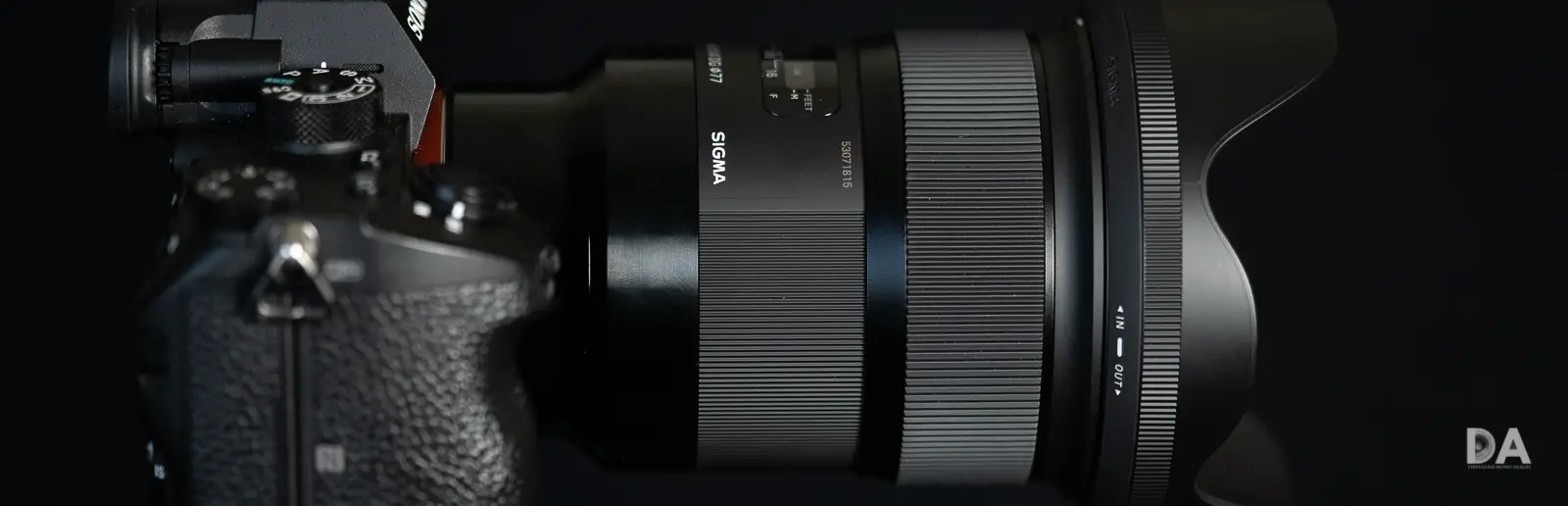
Sigma has faced a scrap of an uphill battle with the Iron versions of their ART series if the anecdotal feedback I have received is a valid indicator of the market. Size matters, and the ART serial lenses were already typically either the largest and heaviest in their course or close to information technology…and that was on the larger DSLR bodies from Canon, Nikon, and (to a much bottom extent) Sigma. Sigma'southward decision to retrofit a number of its Art series lenses with new FE versions was one that I both applauded and criticized. I'thou all for choice, and, since I own several Sony cameras, I was glad for more native options there…though it is debatable how "native" these retrofitted lenses are. They are essentially modified versions of the DSLR lenses with a congenital-in adapter for Sony mirrorless. Sigma's MC-11 lens converter is already my favorite lens adapter, and the Sigma Art serial in a Catechism EF mount were already the easiest and best lenses to adapt to Sony mirrorless bodies, so Sigma took it a logical pace frontward by substantially building a dedicated adapter into each lens within a longer housing to allow both the proper "flange distance" (more on that in a moment) and for a more complete sealing of the lens (the MC-eleven does not feature whatsoever weathersealing.) The final designs are clean and functional, but with 1 serious caveat – the FE versions are both larger and heavier than their DSLR counterparts.
Gulp.
Inappreciably the right direction, considering that mirrorless bodies are, by nature, smaller and lighter.
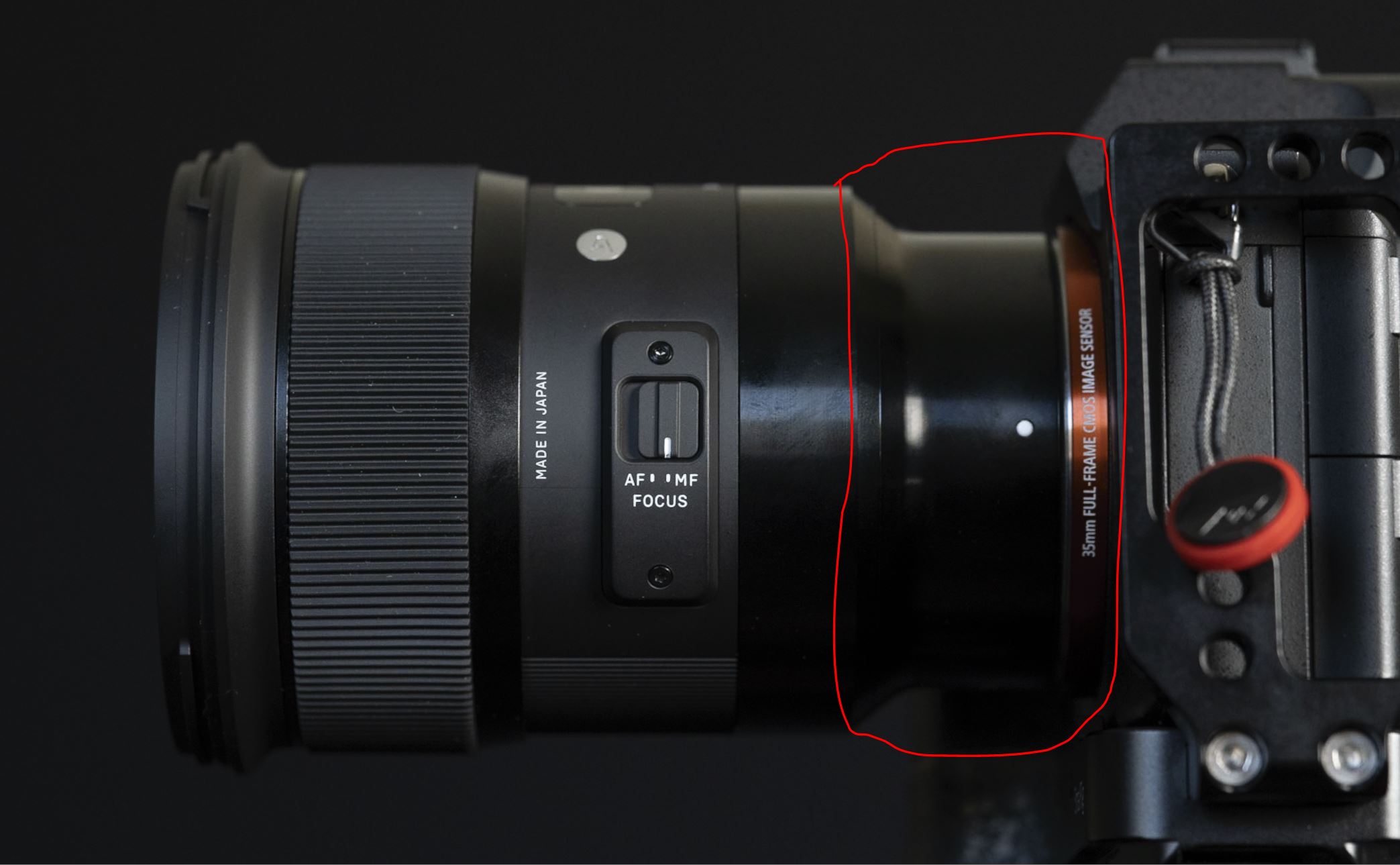
Some of it was unavoidable. The Sigma MC-xi does non just enable proper communication for a Sony body to control the autofocus and aperture iris of a Canon EF lens, but it also moves the elements the advisable altitude from the sensor of the Sony organization and so that, for example, infinity focus is achievable. The lack of a mirrorbox in a mirrorless camera means that the sensor is much closer to the front opening of the lens mountain. If you expect into a Canon or Nikon DSLR (and lift the mirror), you lot will notice that the sensor is quite deeply recessed from the lens mount. On a Canon EOS camera (EF mount), the flange distance (from the lens mount to the sensor) is 44mm. On a Sony Eastward-mountain mirrorless camera the flange distance is just 18mm. Lens that are designed for E-mount will have that into account, merely in this case the original design is for that EF mount, so the elements are all in the wrong position and need to be moved away from the sensor to properly marshal. The byproduct of this is that the lens housing must essentially include a spacer roughly the thickness of the MC-eleven built into the lens, which is what nosotros find. The extra lens housing and electronics to adapt the lens mount add together weight, and the byproduct is that all of these Art series lens are heavier by roughly 100g and grow in length past around 25mm.
Now some people don't heed size and weight, and it is for these people that I'1000 thankful for the FE versions of the Fine art series, as the ART series has always represented a strong value when y'all examine the operation-to-price ratio. Sigma has not increased the price of the ART series lenses on Sony FE, which is meaningful when one considers that there is actress manufacturing these lenses forth with increased internal complexity. These lenses remain a strong value when compared to competing lenses, and that is specially true on Sony E-mountain, which has both 1) fewer lenses compared to the DSLR market and ii) many Sony E-mount lenses are more expensive than their DSLR counterparts. I think it makes sense for Sigma to brand this move, as it gives them a run a risk to leverage some optically excellent lenses into a new system and thus expand the market for them.
These lenses are non for everyone, however, and I call up it is imperative for Sigma to broaden these releases with some dedicated lenses for Sony Iron. I've reviewed all of their DN series lenses for Sony APS-C E-mount, and accept been impressed by a number of them (and ain a few of them), so I know that Sigma is capable of doing so. It is still very early on in the development cycle for the make new Nikon Z-mount and Catechism RF-mountain systems, so information technology remains to be seen whether or not Sigma, Tamron, and others will be able to develop cross-platform lenses for these three systems. Interesting days are ahead, though, I'm sure.
The Sigma 24mm f/1.4 DG HSM | ART was, I believe, the simply Fine art series lens that I missed reviewing when it was initially released. In the past few months Sigma has been releasing new versions of its ART series in Sony Atomic number 26 (total frame Due east-mount), and so I thought I thought I would kill 2 birds with one rock past both reviewing a lens that I had missed and likewise expanding the sample size of Fine art serial on FE lenses across the 50mm f/1.4 ART Review on Iron I did a few months ago. The 24mm focal length is plainly a very pop one, and combining a great focal length with a not bad maximum aperture of f/i.4 really expands the artistic opportunities. Sigma had this Sony Atomic number 26 marketplace at this focal length and aperture value to itself for a few brusque months, only Sony has already thrown a fleck of a monkey wrench into the 24 ART's marketplace by announcing the new 24mm f/1.iv G Master lens. That comparison will be interesting, for the new GM lenses costs lx% more but the 24 Art weighs 73% more than. If my past experience bears true, the optical functioning will be competitive between the two lenses, with some give and take from them both. I'll probably revisit this when I review the 24 GM lens in the future.
So if size and weight and non deal-breakers for you, this lens volition surely be interesting if yous are looking for a high performance, huge aperture prime lens at this focal length. Read on to find the pros and cons of Sigma's offering.
Prefer to scout your reviews? You tin can view my total video review here:
Check me out on: My Patreon: | Google+: | Facebook: | Twitter: | Flickr: | 500px: | Sign Up for My Newsletter :
Sigma 24 Fine art Build and Pattern
There are some minor modifications to the 24 Fine art in the new FE version that we'll highlight here, but this is also an instantly familiar lens to anyone who has used any of the Sigm Art serial lenses. You can get a detailed, interactive await at the lens in this video:
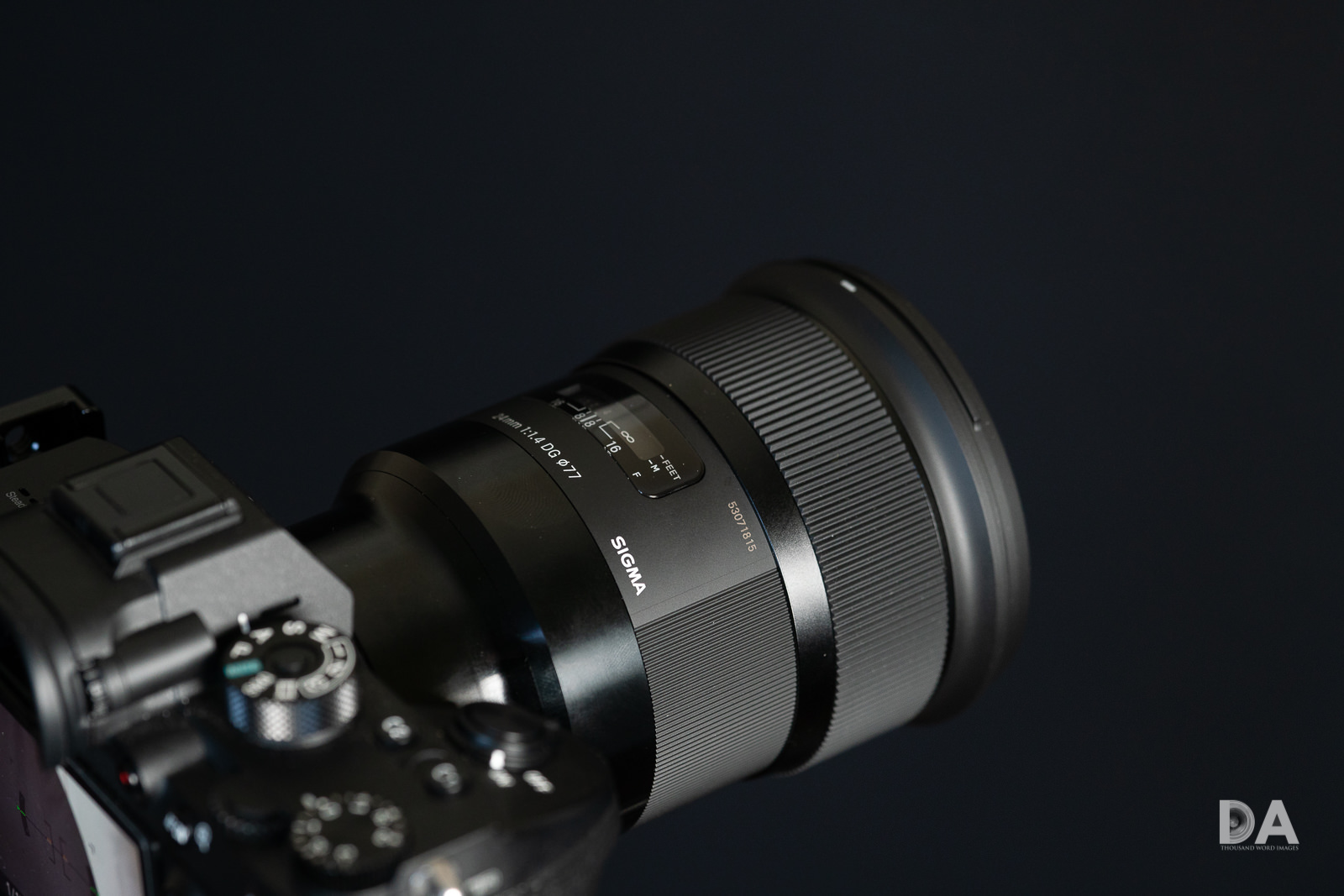
Sigma pioneered a unique style of its own when it launched its Global Vision look in 2013, and, while familiarity with the series has eliminated any excitement over the pattern language (this will be the 14th Fine art serial lens that I've reviewed plus some of the Gimmicky and Sport lenses that share similar design philosophy), I still feel like these are beautifully and cleanly designed lenses. Sigma has cleverly employed texture variations rather than colour variations into the design language that adds both style and practicality. The ART lenses like the 24 ART have plenty of "grippy" surfaces that make it easy to handle and utilize the lenses.
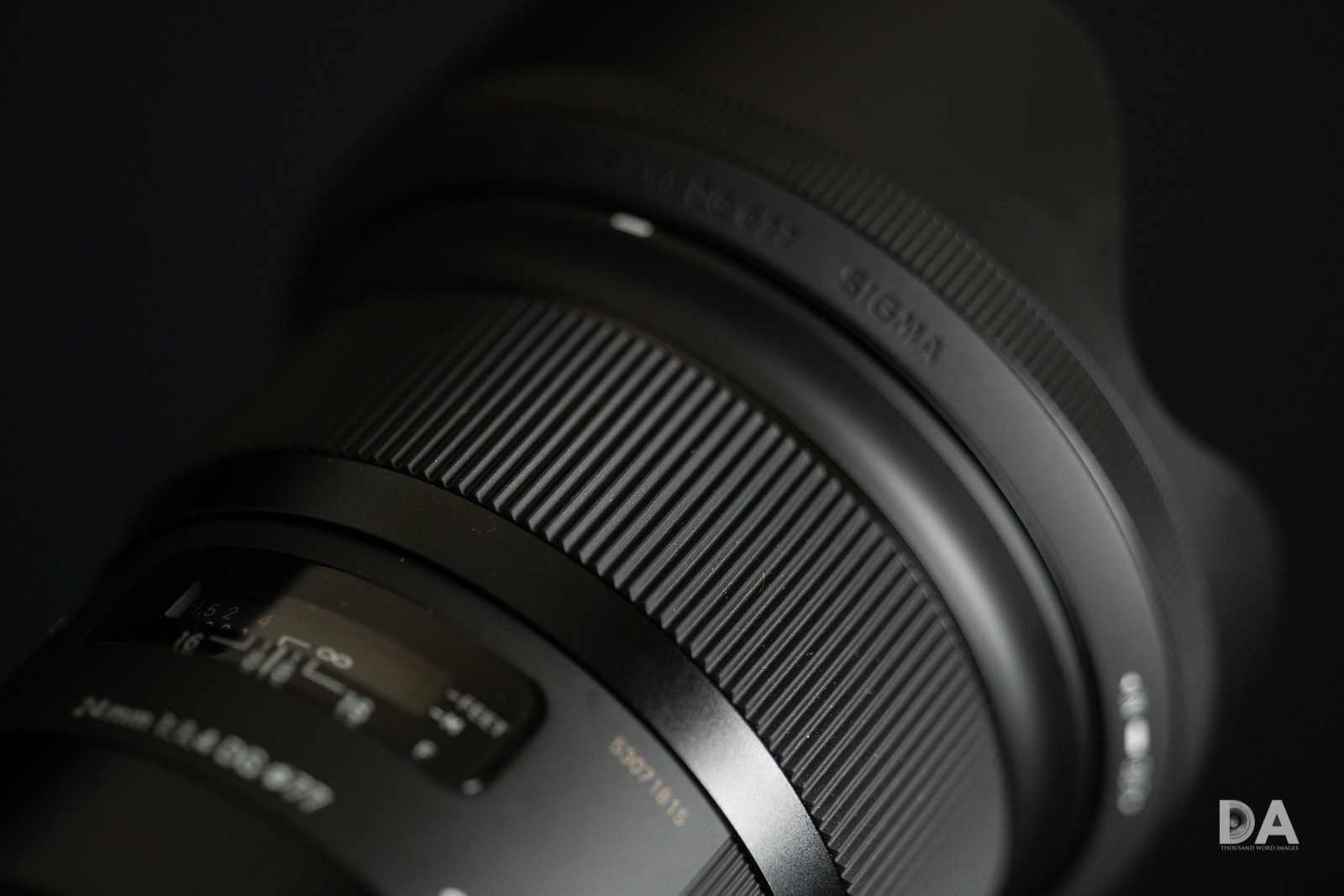
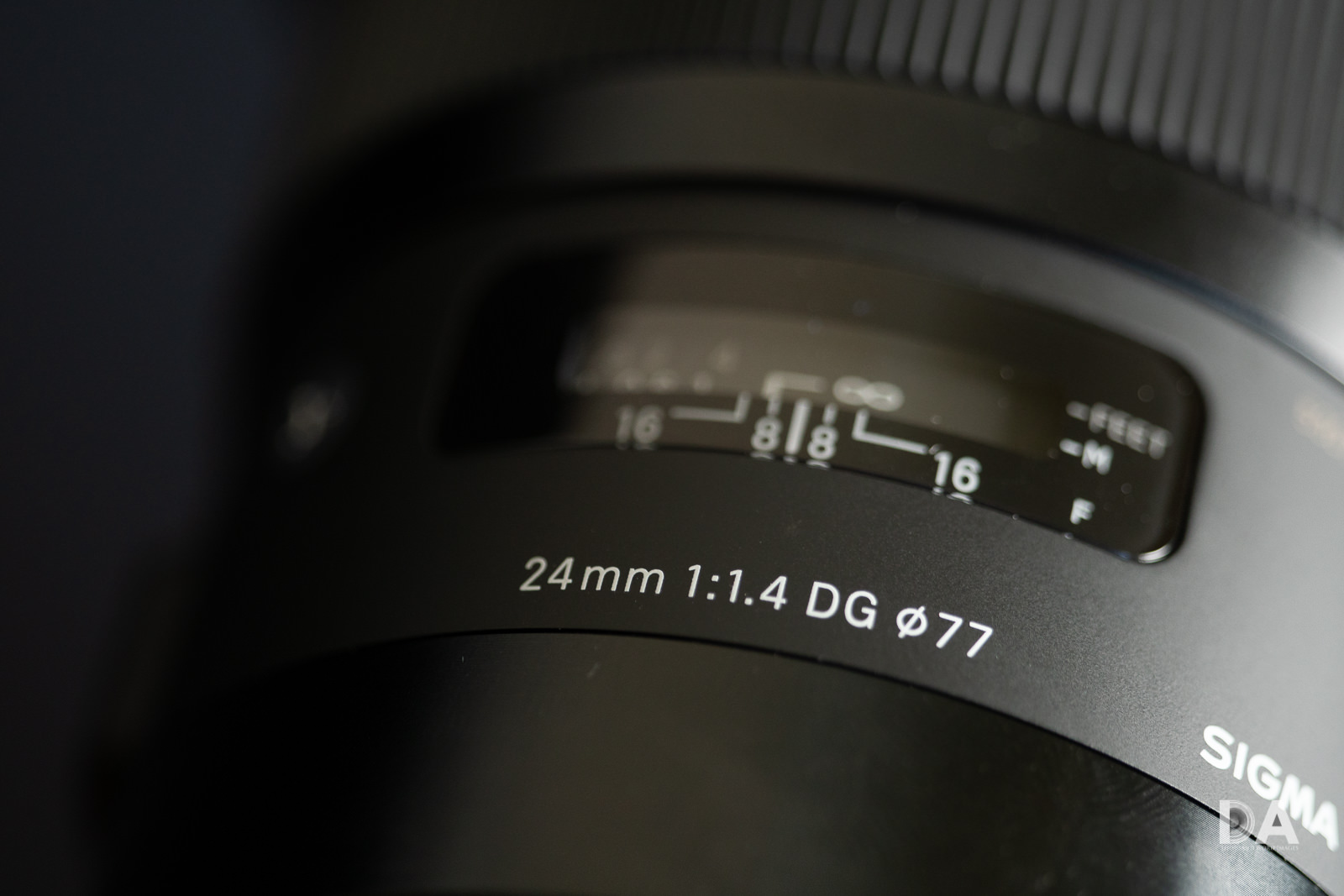
The focus ring is broad, substantial, and like shooting fish in a barrel to grip. Y'all will too note from the photograph that this lens differs from lenses purpose-designed for mirrorless (and the focus-by-wire manual focus systems they use) by the inclusion of a distance window. I don't listen this inclusion at all, though it is worth noting that mirrorless bodies rely on difference focus aids to help enable accurate transmission focus (should you utilise it), and so at that place is a good adventure you won't actually use the focus window much. This lens does not have a particularly long focus throw – peculiarly between 1m and infinity – so manually focusing is a bit of a chore in that range. Far more than useful to most people will exist the fact that the role of the frame with the agile focus betoken volition automatically magnify in the viewfinder or LCD when input on the focus band is detected. Y'all still probably won't use the MF band a lot, but this is a very useful aspect of Sony mirrorless.
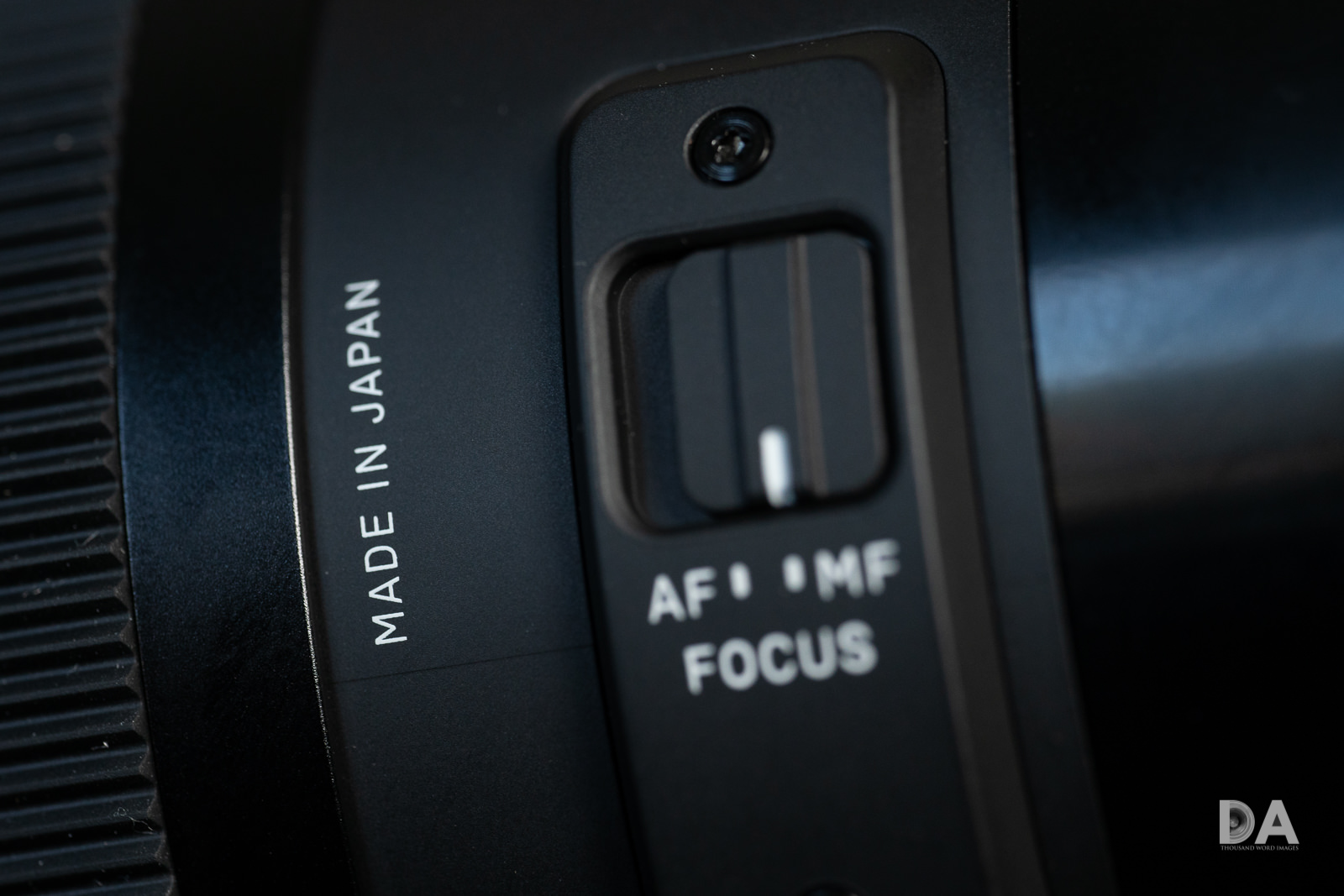
Of unquestioned usefulness is the AF/MF switch on the lens butt, which is something that many E-mount lenses do not accept. I always welcome it, as it gives you lot a "shortcut" to making that switch without relying on changing focus modes within the camera.
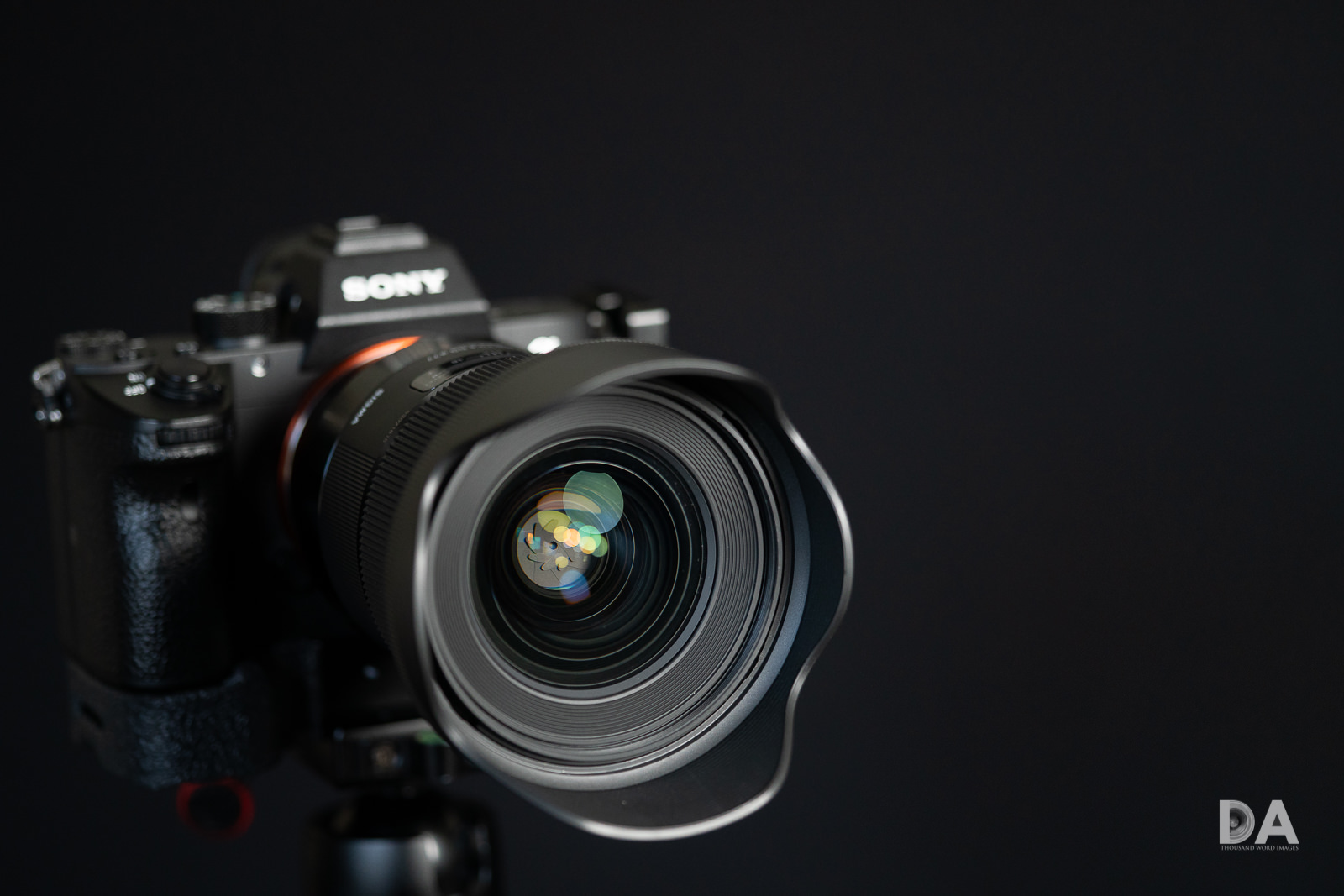
The lens comes with an included lens hood and padded case for the lens, which are e'er welcome. The lens hood is petal-shaped, and 1 highlight for me on Sigma Art serial lens hoods is the soft-touch on transition expanse where the hood mounts onto the lens. The lens hood itself is adequately standard plastics, while the lens body is a mixture of metals and what Sigma calls "thermo-blended materials", or loftier-grade engineered plastics. The byproduct is robust, attractive, and…heavy.
Not in an absolute sense, as the 24 Art is really one of the lighter lenses in the ART serial. The Canon version weighs in at 1.46lb (665g), but this FE version adds on a chip of weight. Sigma has proven a fiddling coy virtually the weight and length of the Fe versions of the lens thus far, with most retailers (and their own website) only listing the size and weight of the Catechism/Nikon/Sigma versions for the FE listings, as if they are all one and the same.
They aren't.
I had to put the lens on my own scale, but, without caps, I weighed it in at 768g, or 103grams heavier than the EF version. If there is any consolation, it is that the MC-11/EF philharmonic weighs 24g more than (the MC-eleven weighs 127g), so you accept technically saved a bit of weight. The incoming Sony 24mm f/i.four GM weighs 15.7oz (445g), which means that the FE version of the 24 Art is some 73% heavier.
Ouch!
The lens also grows a fair bit in length, from about 3.55″ (90.2mm) to almost 4 3/4″ (126mm) past my measurement. If yous wait inside the rear of the lens, you will mostly see a fair amount of space before the rear element. The sides of the inner barrel are ribbed, and I suspect that there are electronics underneath them that function similarly to those in the MC-11 except tuned for this specific lens. I've noted not only some improvements in the quality of focus of the FE versions of the lenses vs adapted Sigma EF lenses but too improved smoothness in the operation of things similar the aperture iris. When using adapted lenses y'all get some extra noise when the aperture is being changed, and I've even seen a petty quirky behavior there in the past. With the Fe versions aperture changes are smooth and silent…as they should be.
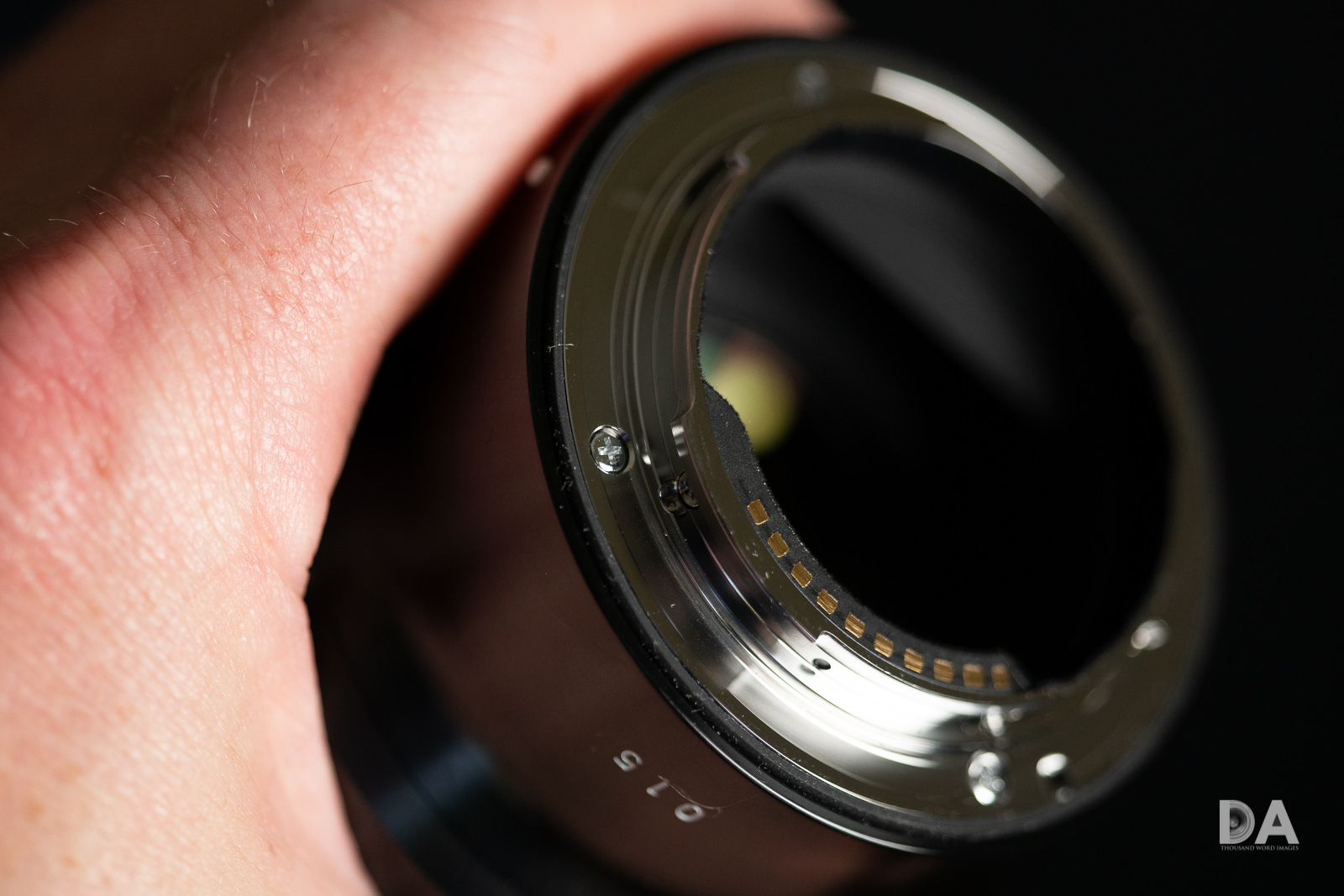
While the 24 ART has non received any kind of extensive redesign to ameliorate internal sealing, Sigma has added a rubber gasket to the lens mount to aid better dust and moisture resistance. This isn't a substitute for true weather sealing, but information technology is certainly improve than nothing!
The original diameter of 3.35″ (85mm) remains unchanged. The resulting lens is on the larger side of medium, and quite a scrap larger than the GM lens (which is fairly close in size to the Canon EF version of the 24 Fine art). Information technology's withal a moderately sized lens, though, and I didn't have a hard fourth dimension with the balance on my Sony a7R3 that I used for a test, though information technology should be noted that I utilize the Small Rig grip-extension on my a7R3 which does aid to balance larger lenses. Up front there is 77mm filter thread, which is large but common. Here is one intrinsic advantage over the 20mm f/1.4 ART, which has a bulbous front element and cannot accept traditional screw on filters.
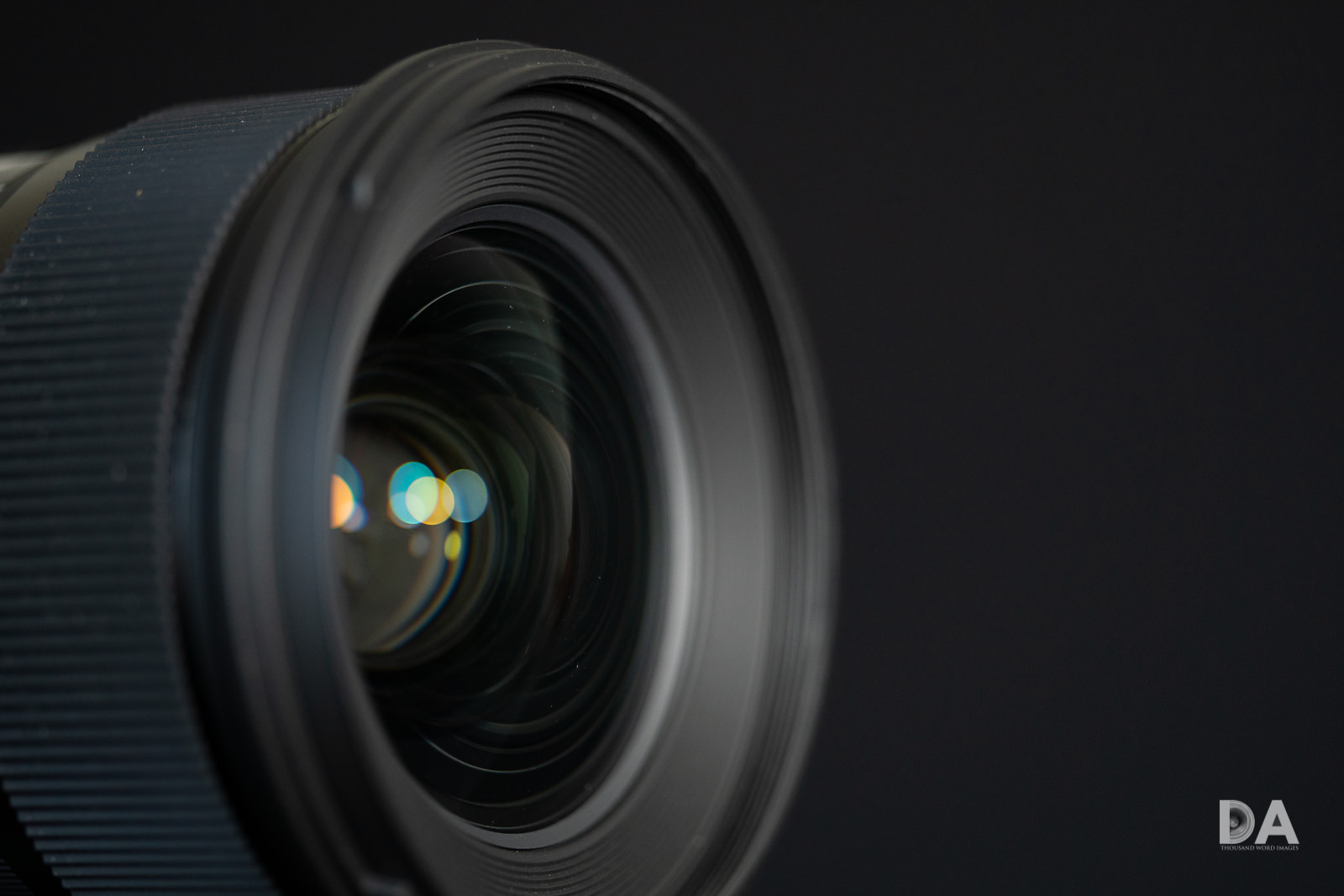
Like other Sigma ART lenses, the 24 ART is eligible for Sigma's mount conversion service if you change camera systems in the future, and, while you cannot use the FE versions of the lenses on the USB dock, you can receive firmware updates by downloading them from the Sigma website and running the update through the camera body.
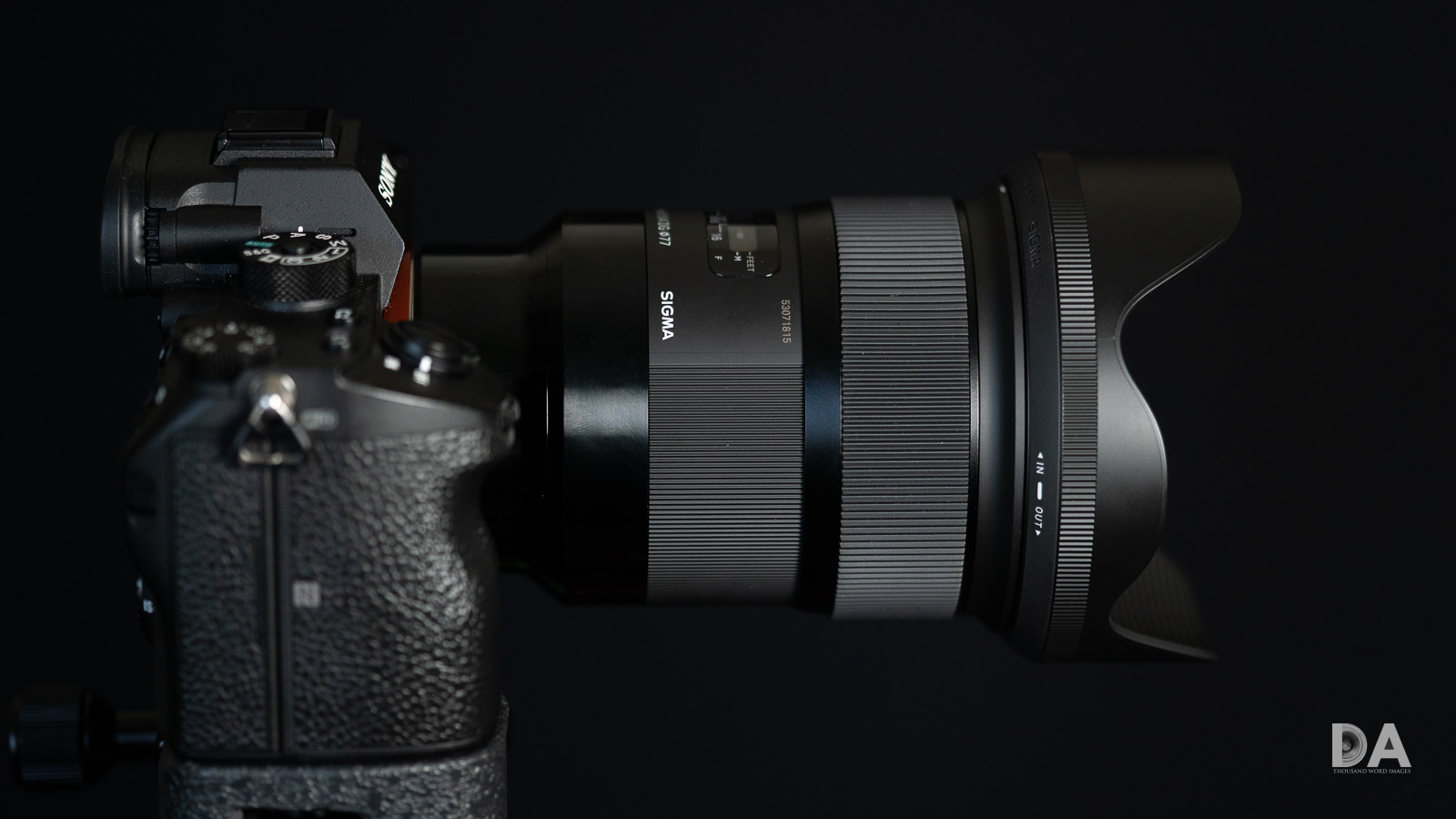
All told, this is an attractive, mod, well-made lens that, unlike many competing lenses, is actually made in Japan. The only real criticism is the size and weight, which definitely hit the loftier end of the spectrum of lenses in this class on the Sony mirrorless platform.
Sigma 24 Fine art Autofocus
The significant challenge for Sigma is that these ART series lenses were not originally designed with Sony in mind. I do believe that Sigma has become more conscious of the expanding role of adapted lenses on Sony mirrorless since their market share has grown, but that wasn't as true when the earlier ART lenses (including the 24 ART) were beingness developed. Furthermore, my feel has been that the poorest adapting feel of the Fine art serial has been with the wider angle lenses. Many of the normal and short telephoto options adapt to a most-native operation, but for some reason the wider bending lenses accept a few more glitches.

That brings u.s. to the advantages of the FE version. The commencement is that while the MC-11 often does an excellent job with adapted lenses, it is one device that needs to multitask for a diverseness of different focus needs. The 24 ART, like other Art lenses in an Fe mount, has dedicated hardware design to bridge the gap for that specific lens from the original focus system to the unique needs and advantages of Sony's hybrid AF system. And, with a few exceptions that I'll detail in a moment, it does quite a skillful job of doing and so.
At that place are some intrinsic advantages to Sony mirrorless focus. First of all, the demand for focus calibration is eliminated. It's a treat to mount a new lens on the camera and not worry nigh whether or not it is going to focus accurately. The need for the USB dock is eliminated, and I accept seen the all-time autofocus performance out of Sigma lenses on Sony bodies that I've ever seen. Focus is generally accurate in a wide variety of focus situations. The lens fully supports Sony-specific attributes like Eye-AF. And, when focus is nailed, the lens is capable of some impressive results every bit this photograph at f/1.4 and its crop prove:
Unfortunately I did experience some occasional glitches where the focus would accurately lock (every bit I could visually confirm through the viewfinder), but inexplicably would shift away when I clicked the shutter button. Expect at these two images. The focus bespeak was prepare in the aforementioned place for both images, simply in the showtime image the lens shifted away focus at the last moment to, well, zip. Cipher is accurately in focus. In the second image I redid focus and got accurate results (on the moss-covered co-operative).
I had a few other occasions where something similar happened, and a few of these were even more surprising as they were at smaller discontinuity values similar f/5.6 and f/8 where nailing focus should exist very easy. The lens just didn't get focus right sometimes, which bluntly is pretty rare on Sony mirrorless.
I think this is probably a solvable problem via a firmware update, but I did desire to report that it did happen on occasion, though not regularly. Almost of the time I got very proficient focus results, fifty-fifty at f/1.4:
You may have noticed that some of these images evidence off the ability of the 24 ART to focus down very closely (ix.84″/25cm). This allows for a fairly robust 1:5.3 reproduction ratio, or a 0.19x maximum magnification. That's a useful figure, and I really capeesh the way that the close focus ability of the lens increases the flexibility of the type of images that you tin can create with the lens.
In AF-C manner the lens focuses silently and quickly. In AF-Southward or single shot modes the autofocus is still quiet, only you can hear the elements slide along a little with major focus changes. I don't know why y'all don't hear this with continuous autofocus, only I've observed this previously with other lenses, too. All focus modes are available, and other than the glitches I've previously described, the autofocus operation is very much like a native Iron lens.

There's room for improvement, apparently, but for the most part this lens does what I would want it practise in terms of autofocus. It's certainly leaps and premises alee of many other wide angle lenses that I've tried to conform to utilise on Sony.
Sigma 24 ART Iron Prototype Quality
Here is where the rubber meets the road, in my mind. When a company like Sigma elects to completely abandon the thought of building a compact lens, their lenses must stand solely on their optical performance. And, in fact, that is largely what Sigma has successfully done. Many people associate the ART brand with optical excellence. Is that truthful of the 24 Fine art, especially since it is (by a fair margin) the largest option of its focal length in the Sony arrangement? Nosotros'll explore that in this section, as the answer is a trivial, well, nuanced. It should be noted that optical formula of the FE version of the lens is identical to Canon EF or Nikon F mount lenses, so if you are considering the lens in those mounts my observations will be equally applicable.
My coverage of paradigm quality falls into 2 categories: one) Resolution, where I comprehend sharpness and contrast and 2) Rendering, which looks at the global expect of images in areas like colour rendition, bokeh, flare resistance, chromatic aberration, etc… I would recommend that you picket the following video episode where I interactively breakdown the optical performance of the 24 Art in particular:
Sigma 24 ART Resolution
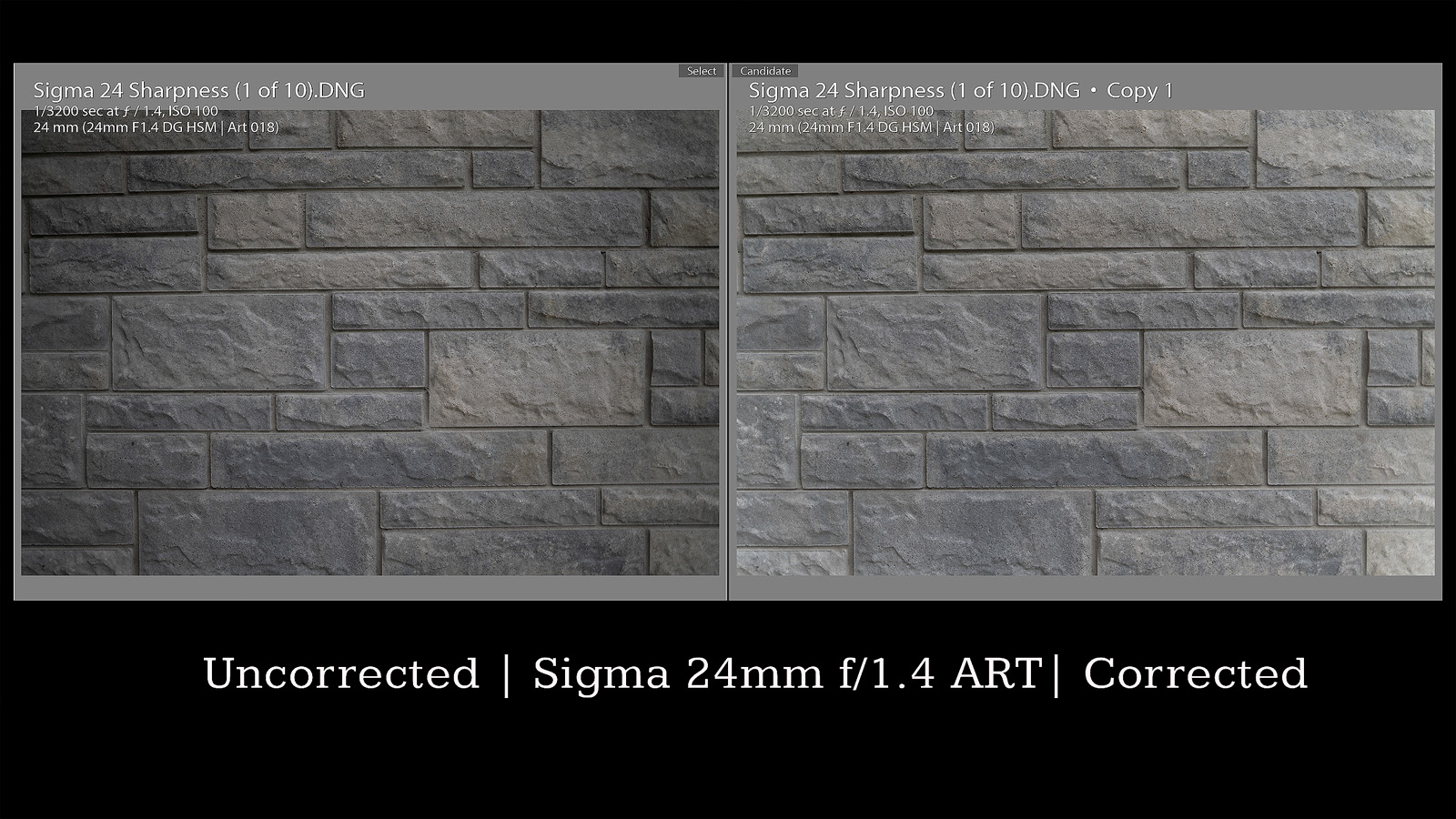
Information technology should be noted that the 24 ART is fully supported by Sony's in photographic camera corrections, but I'll exist examining the uncorrected RAW images in this section to actually see the optical performance. All of the test shots are taken on a 42MP Sony a7R3 camera body, which is a fairly demanding platform for lens performance due to the loftier resolution. Things like distortion and vignette will be corrected in-camera for JPEGS. As nosotros can see from the comparison beneath, all the same, there is some mild distortion (a tiny bit which remains after the Lightroom/ACR contour is applied) and some fairly heavy vignette (close to 3 stops in the farthermost corners). The applied contour clears up the vignette nicely.
A look at the resolution and contrast shows an impressively sharp center at f/1.four with fairly good contrast, but the edge functioning is quite soft past comparison. The extreme corners are worse yet.
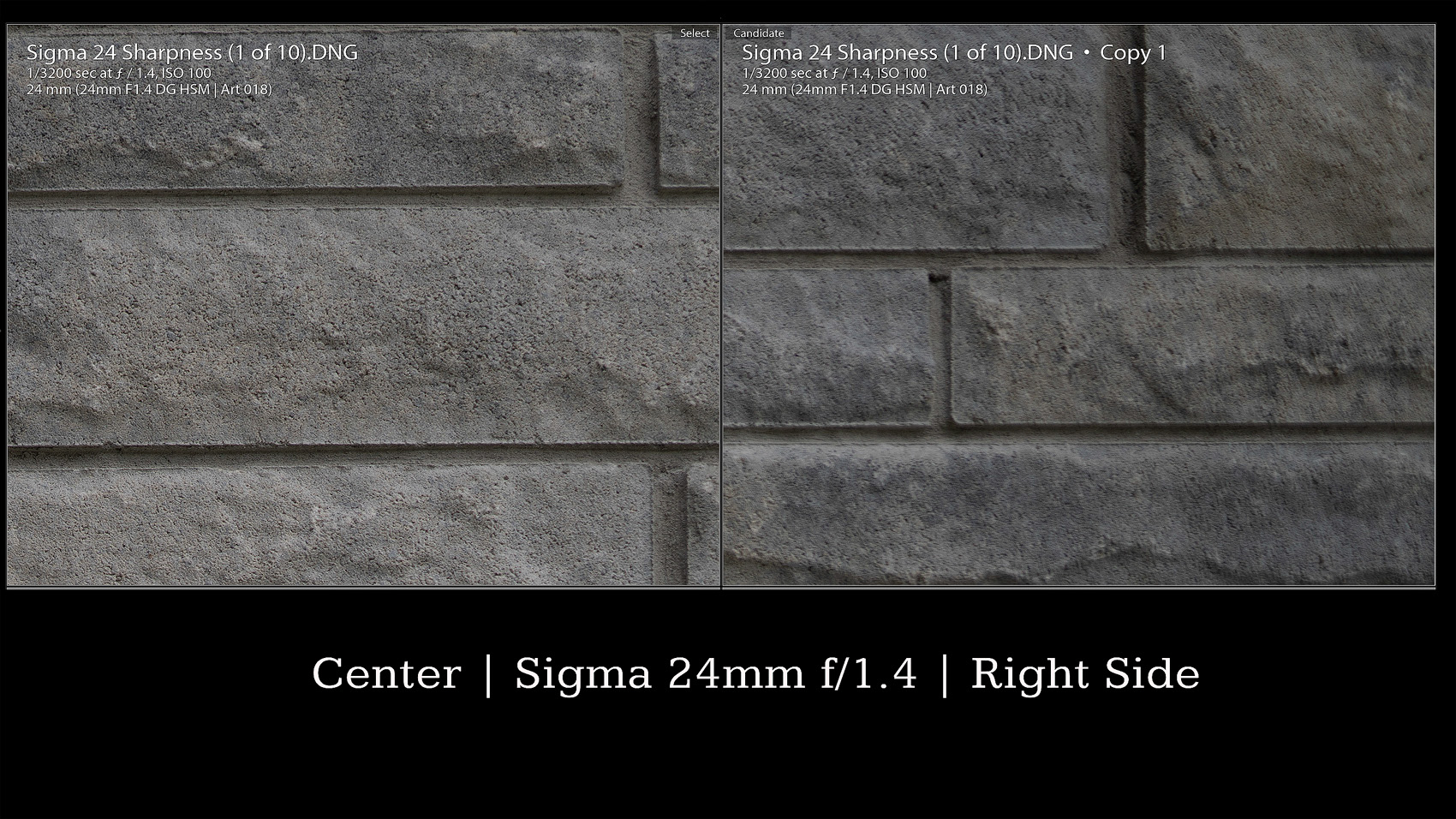
A expect at both sides of the frame simultaneously shows that the left side looks ameliorate than the right side. This could signal some decentering, though the 24 Fine art does suffer from some fairly extreme field curvature which prioritizes a very sharp center at the expense of the border operation.
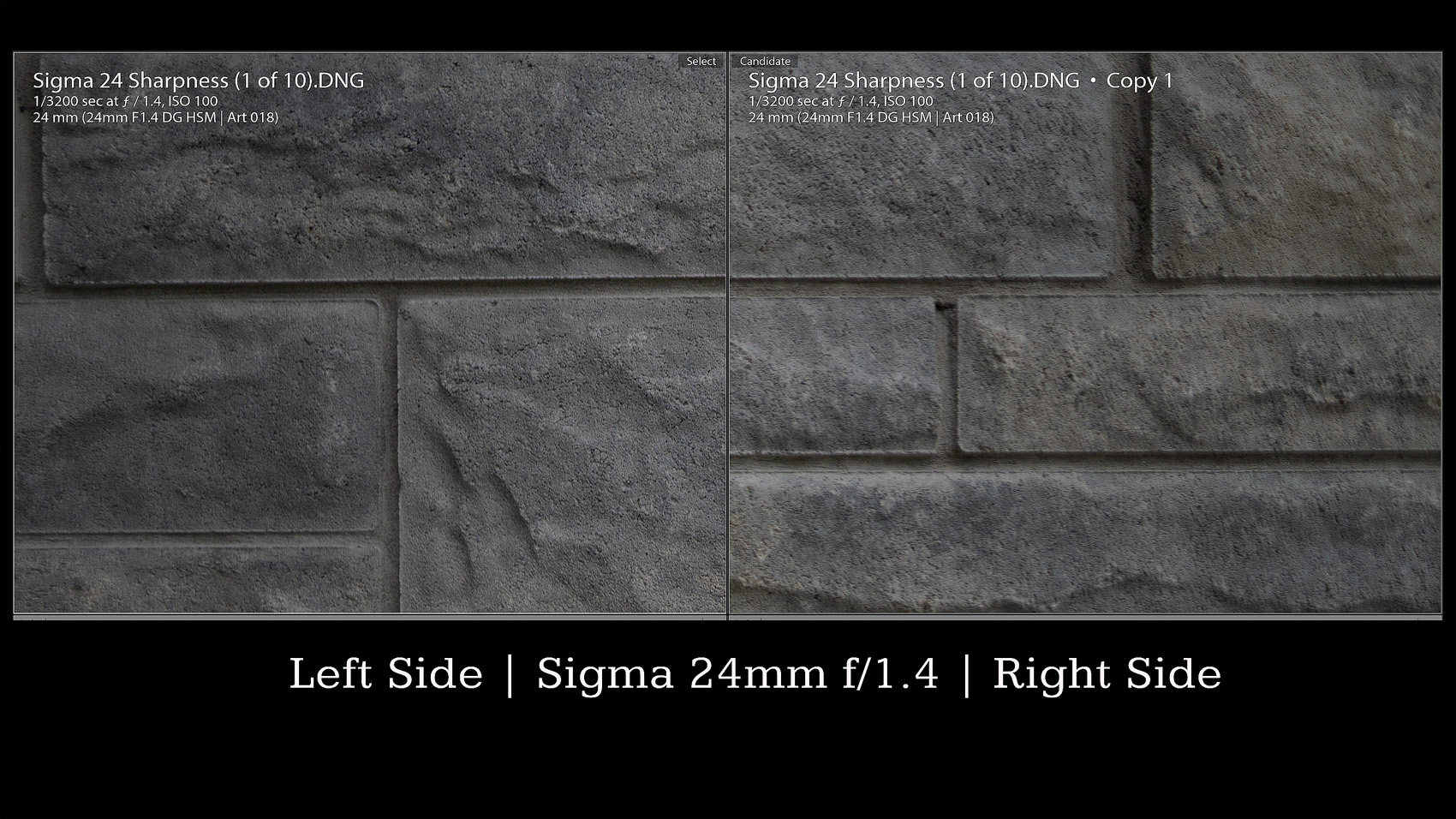
Example in point is this shot, which shows an image composed with the subject field nigh the edge. Even when focused there, the image isn't peculiarly abrupt every bit the crop shows.
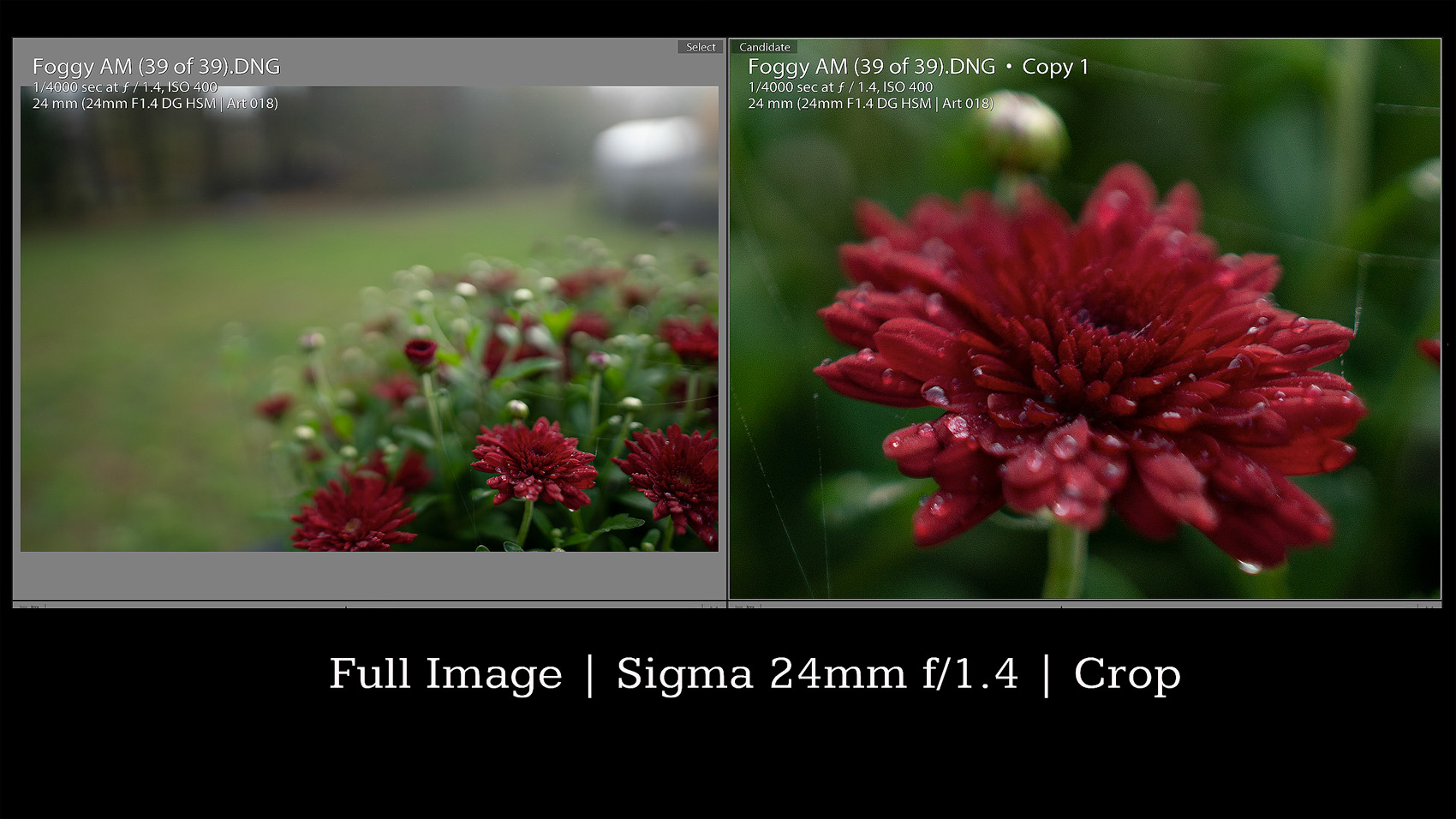
When the subject is nearer the center, even so, the epitome is very sharp even at f/one.4:

If your lensman mode includes composing within the center two/3rds of the frame, this is a very sharp lens. If edge sharpness is a priority, however, this won't be the lens for you.
Moving on to F2 we find that the edge sharpness improves simply a bit compared to F1.4:
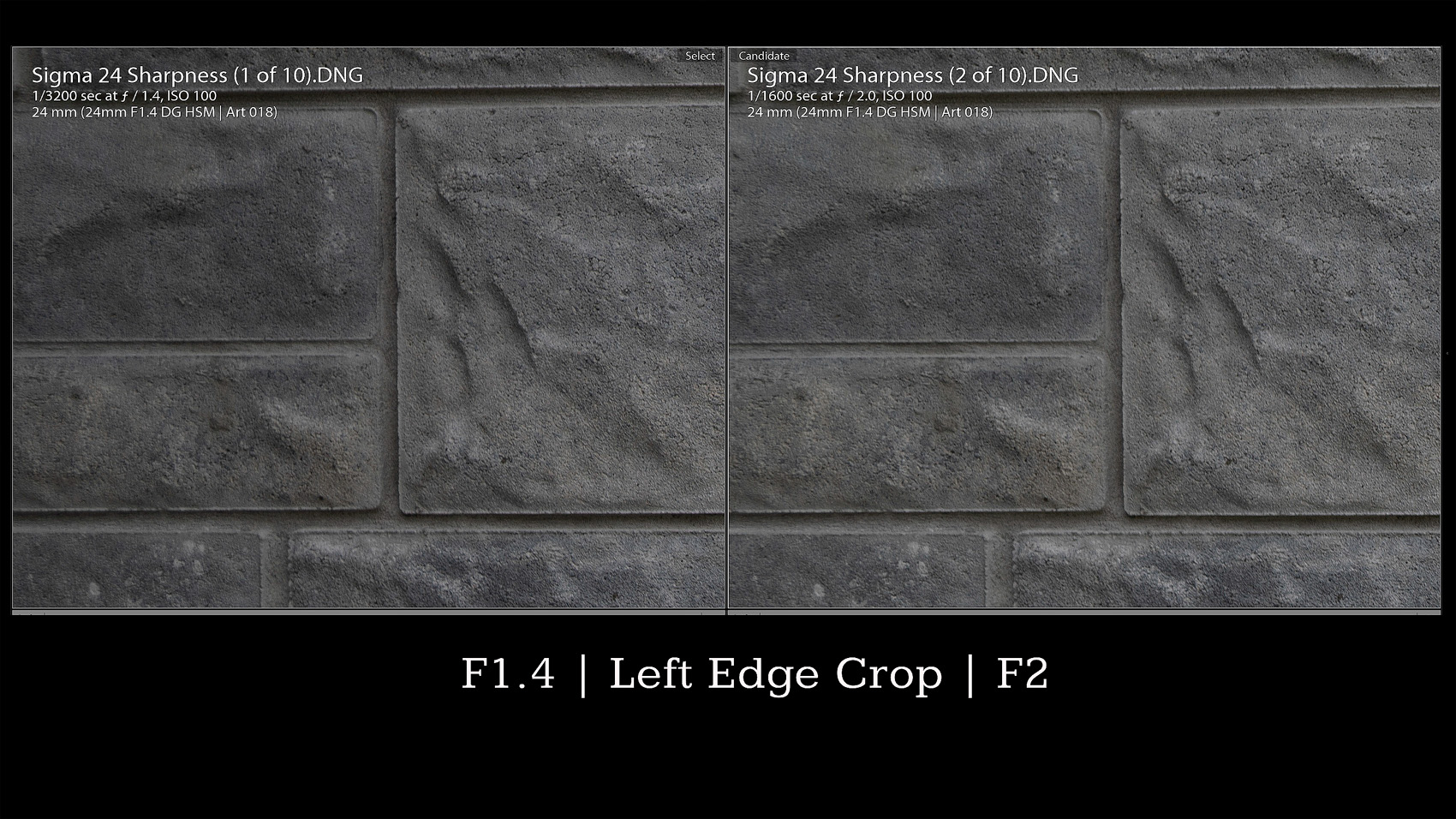
There is some improvement in the center, nonetheless, particular in improved contrast (due to some small longitudinal chromatic aberration clearing upward). Levels in that location are now exceptional, where they remain through the aperture range:
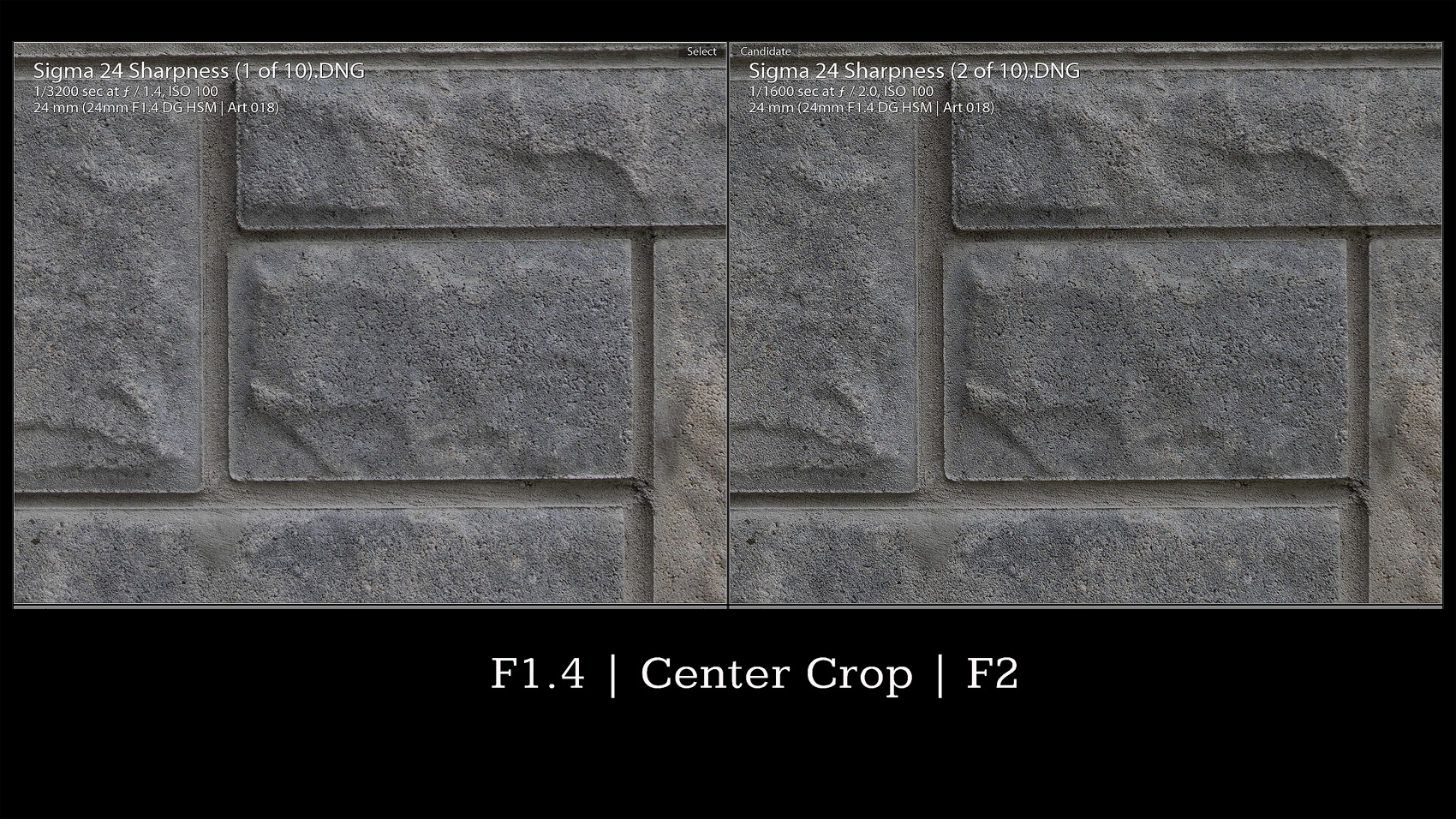
We start to see some significant improvement to edge operation at F2.viii (the center is now perfect):
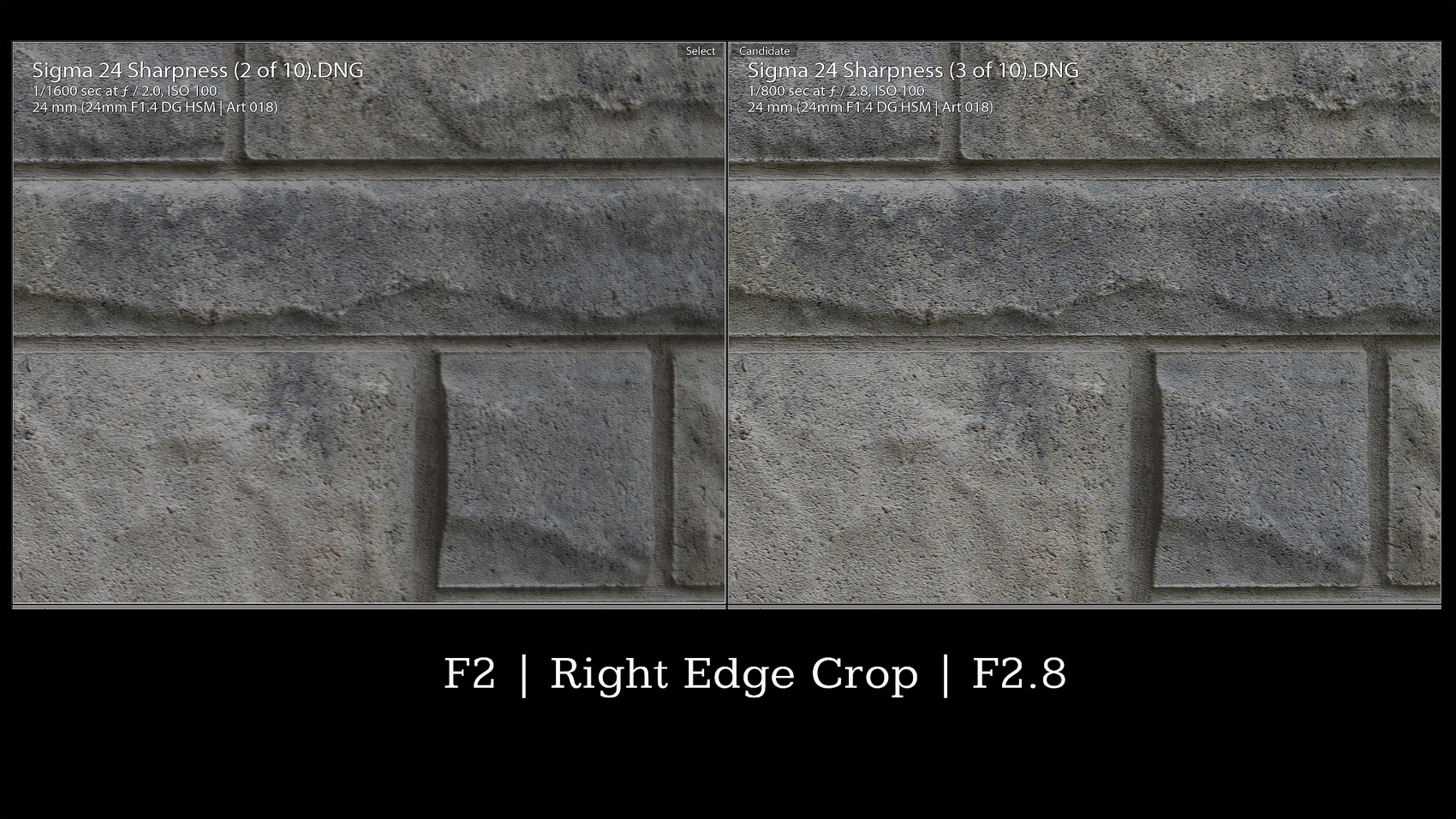
Optimal edge performance (landscape discontinuity) arrives at F5.half-dozen, where finally the edge performance starts to more closely friction match the center performance, though the edges are never quite equally precipitous as the centre at whatever aperture:
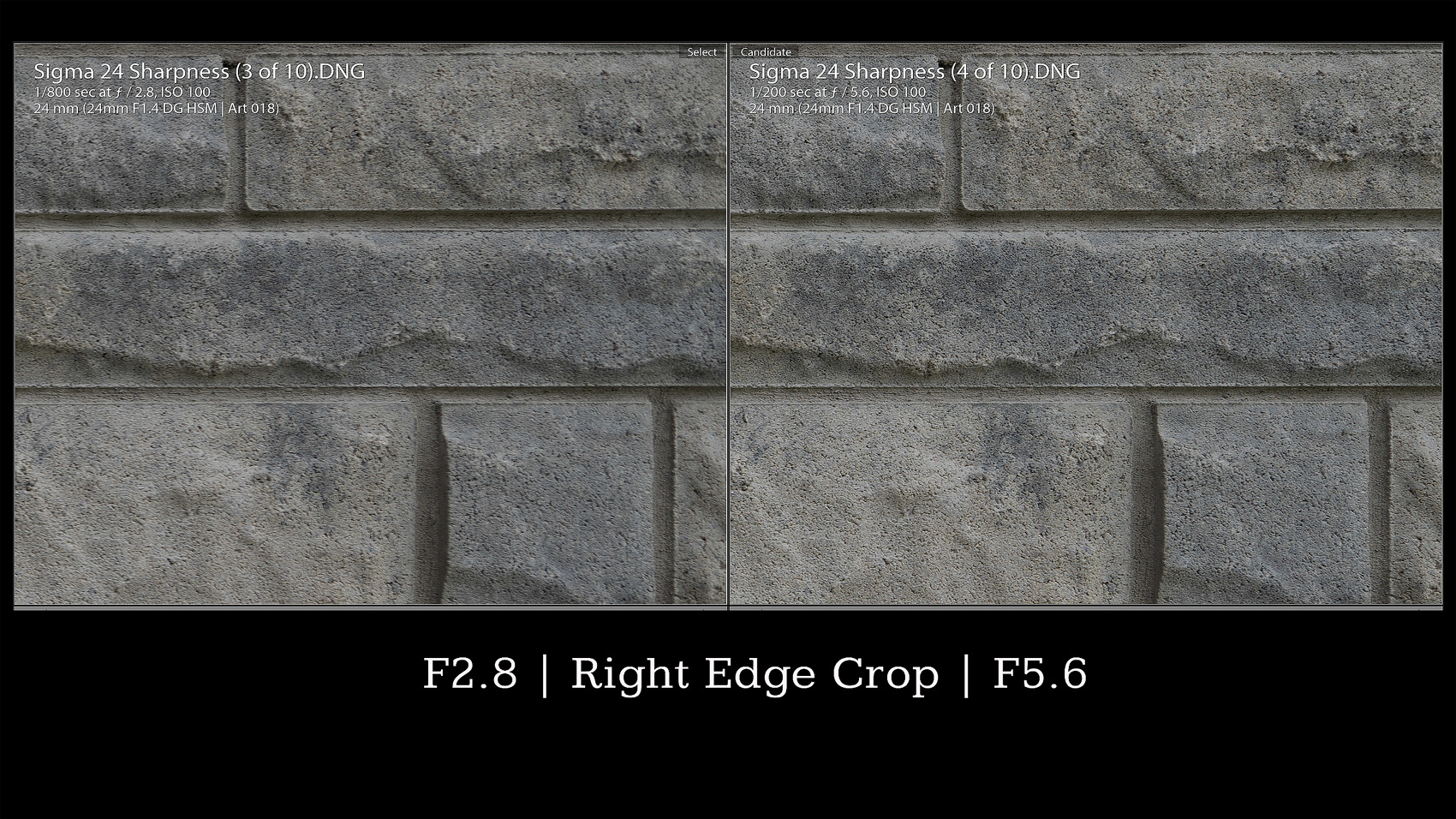
But at that place is one more strange miracle here. Wide open we noticed that the left side looked much amend than the correct side. Merely as the lens is stopped down and the right side improves, the left side has not sharpened at the same rate. Information technology at present looks softer than the right side (at F5.half-dozen).
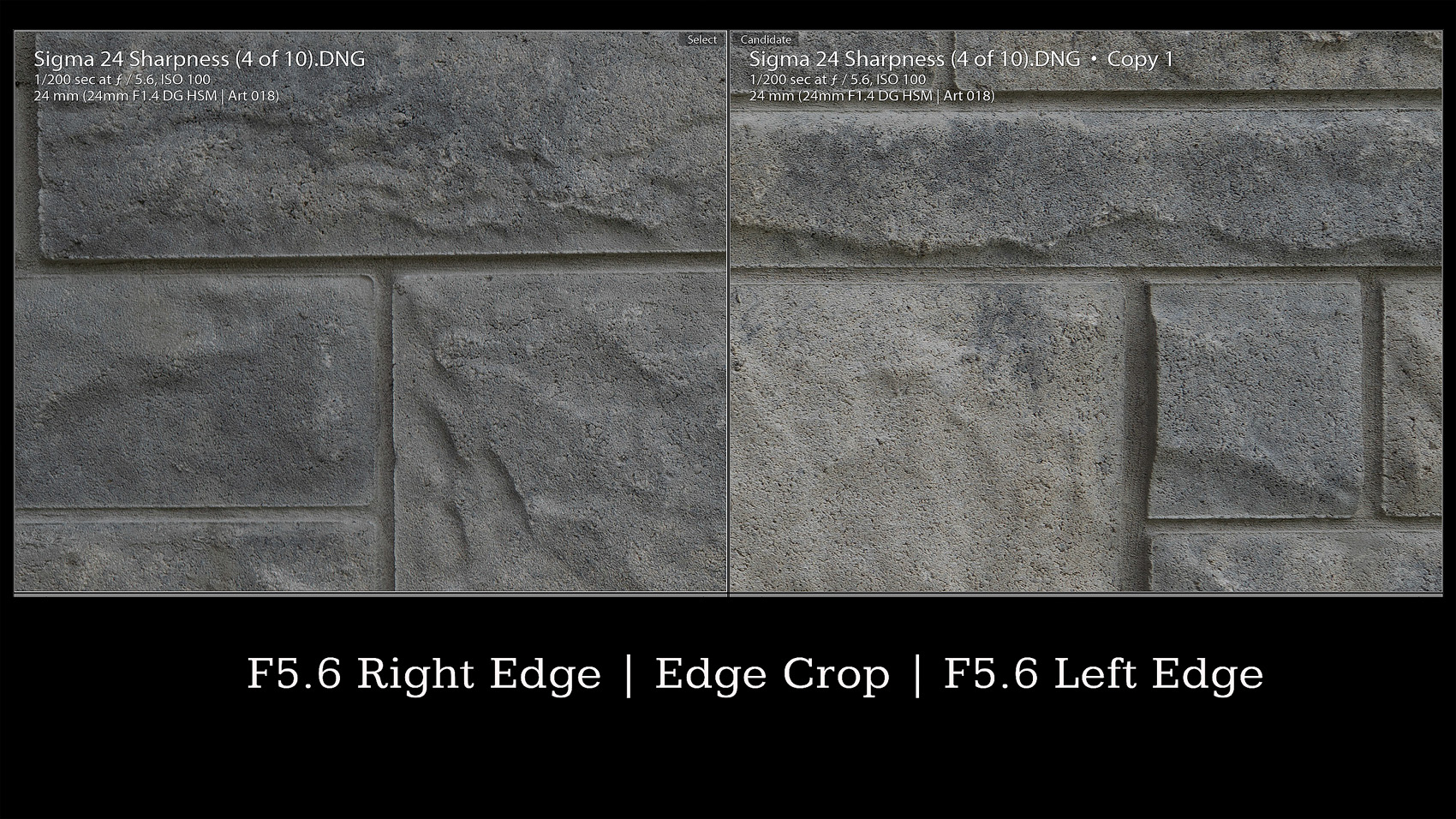
In fact, as I critically reviewed a big number of real-world images, I found that I substantially never got equal sharpness across the frame. One side would ever be sharper than the other, though that side might change depending on where focus was. I'm left to conclude that this lens has some centering issues, which other reviewers take also reported in the past. If your priority is shooting landscapes there are probably better choices. When I compared the atomic (but expensive!) Loxia 21mm f/ii.8 Distagon, I noted that it was the sharper lens (and more even) option for mural work.
That's not to say that y'all can't get beautiful landscape results from this lens (I got a number of them), but when I pixel peep them I realize that I've definitely achieved better results with other lenses at typical mural apertures. Hither are a few mural samples that I recollect await pretty corking in an absolute sense:
I would say that the target market for this lens is more nuptials or event shooters who need a potent middle performance at F1.4.
Sigma 24 Fine art Rendering
We've looked at distortion and vignette previously, only how nigh colour rendition, flare resistance, bokeh, and coma? Some of these measurements are subjective, so in office you may need to trust my feel with a wide diverseness of lenses.
Case in indicate is the colour rendition from the 24 Art. After shooting with information technology for a while, I began to get a sense that the colors were a little flatter than what I was accustomed to. I felt like I needed to inject a footling more than vibrancy into images in post than I was accustomed to. I did a few comparisons to the Zeiss Loxia 21mm f/2.8 that I had on hand, but, to be fair, the differences weren't as pronounced as I expected. The colors were a lilliputian more accurate from the Zeiss lens (meet the grass and sky), and the vibrancy in the yellows was a picayune amend, only I suspect most people will look at this instance and wonder what I'm talking nearly.
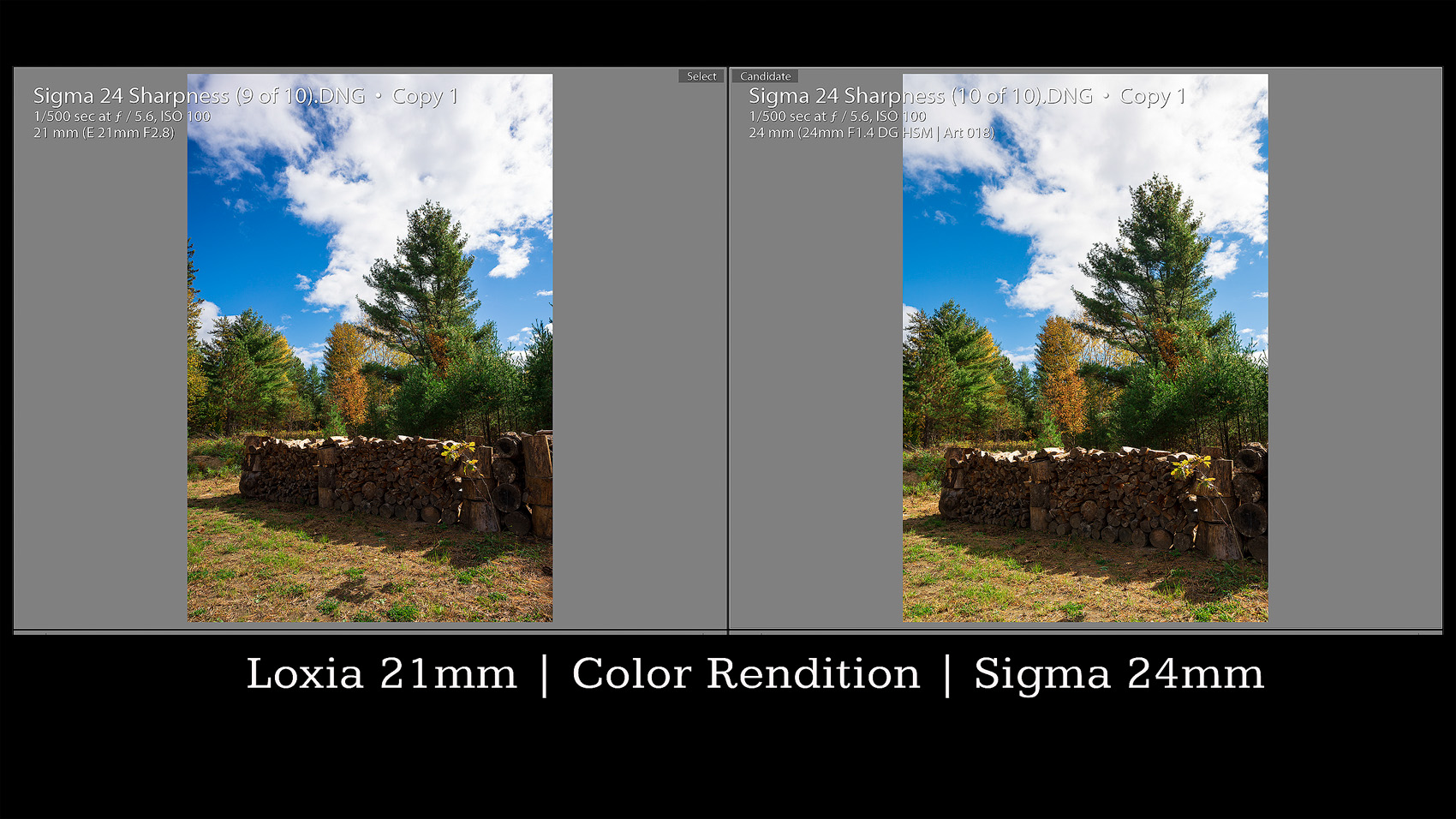
At the same time, on a fundamental, instinctual level, I preferred the color rendering from the Loxia images that I took in like situations. At the same time, like almost lenses, when you start to get a sense of how they handle colour, you can brand some minor adjustments in mail to produce color that you really like. Here's an image that I think the color looks dandy on:

I did do a few extra steps in post to pump up that consequence, though. Hither'southward some other that I did very little to and I think looks good, though:

I'one thousand less ambivalent almost the flare resistance, however, which I consider to be quite good. The third prototype in the serial below is most the worst occurrence that I saw, and it showed that the lens is a piddling more susceptible from side flaring than straight on bright lights.
While a 24mm lens isn't a prime "bokeh-maker", the 24mm isn't bad. It tin focus down closely and has that huge maximum aperture, so there are a surprising amount of opportunities to create bokeh with the lens. The first example beneath was really shot with the lens stopped down, and likewise shows that Sigma has done a skillful job with the discontinuity shape remaining round with the lens stopped down.
I didn't observe chromatic aberrations being a significant issue (either lateral or longitudinal). The very modest corporeality of greenish fringing in this shot represents worse-case scenario during my test, and it was very balmy.

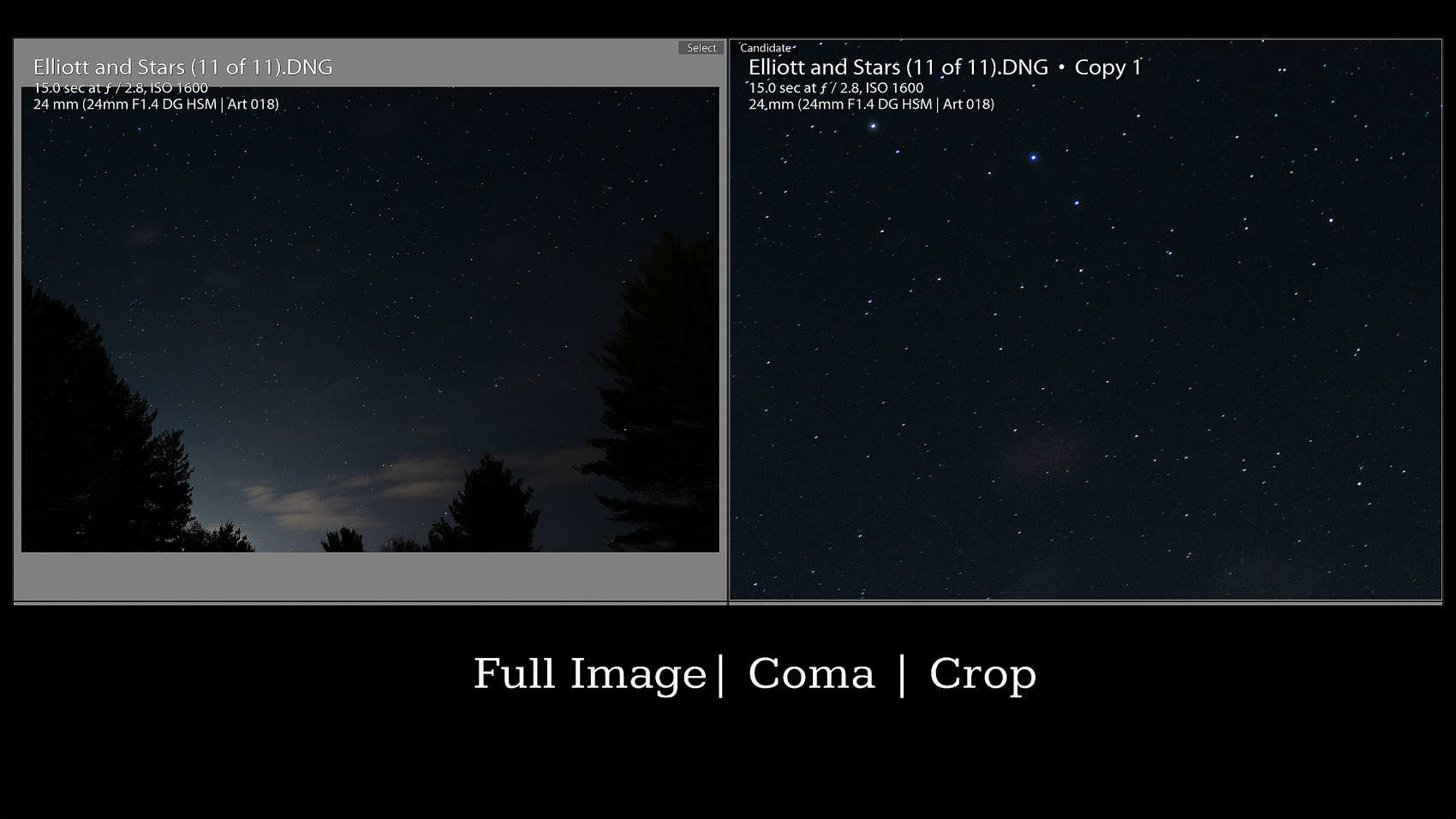
Comatic aberrations (or coma) are some other story, however. While the lens is capable of sucking in a lot of light at f/ane.4 (always swell for astro work!), it suffers from a fair scrap of coma at every aperture brusque of f/2.8, and there are better options at f/2.8. Even at relatively brusk exposure times (x seconds in the shot below), I had an issue with stars "stretching" or becoming a little more like dashes than points. I shot another lens at the same fourth dimension with a like focal length, so it wasn't an outcome with star movement. It was more of a distortion.
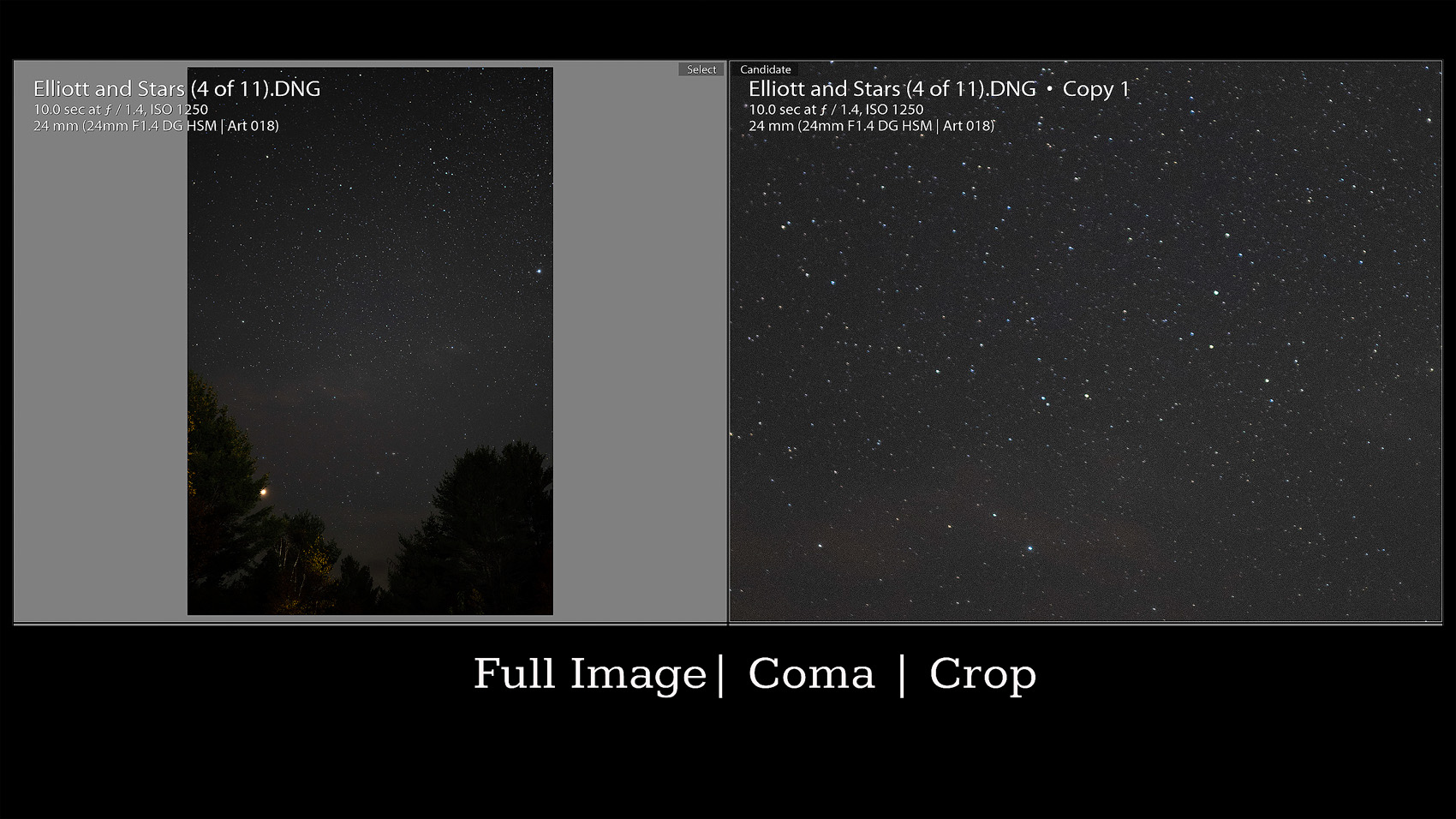
I saw a similar result when I did a review of the 24-35mm f/2 Art zoom lens, and so information technology must be a "Sigma thing". The new 14-24mm f/2.eight Fine art lens is vastly improved in this regard, and was the kickoff Sigma lens that I wholeheartedly embraced for astrophotography. The 24 Fine art left me a little underwhelmed even at f/2.eight, every bit star points were still non as crisply defined as what I would similar.
In conclusion, the lens has some some excellent strengths, including great center sharpness, low distortion, good flare and chromatic abnormality control, along with reasonably good bokeh (focal length however).

This is countered by somewhat poor corner performance at wide apertures, uneven centering, and poor coma performance. I don't recall that any of these things are deal-breakers, but I think the people that volition most capeesh this lens are those that do weddings, events, or reportage more those who shoot landscapes or night skies. Employ the lens to its strengths and I think it will reward you lot. Bank check out many more images in the Image Gallery hither.
Conclusion

Ironically my time spent with the Sigma 24mm f/1.4 ART made me realize how far the Sigma ART series has come in the by iii years. They've improved so many of the weak areas of this lens and other earlier Art series lenses, from AF performance to colour rendition to coma control. I practice think that the Sigma 24 Art has a role for both DSLR shooters and Sony mirrorless shooters, but the lens is essentially a series of compromises. On Sony, y'all are compromising size and weight to become a more reasonable price compared to the Sony 24mm f/1.4 GM lens. Optically y'all are compromising edge functioning to go swell center performance. I as well noted a few focus glitches here and there along with a centering issue. This lens remains a strong value for those looking for this focal length to utilise at weddings, for portraits, and other events, but neither is it a abode run every bit a multipurpose lens or dedicated landscape selection. If you lot opt for it, practice so with an intent to employ it its strengths, and I think yous volition be happy with it. But if you are a Sony shooter looking for light and compact, you will need to await elsewhere.
Pros:
- Offers a strong value of price to performance
- Very strong center sharpness from f/1.four
- Expert flare and chromatic aberration control
- Adequately low distortion
- Supports all Sony focus modes and Eye AF works fine
- Nicely constructed
Cons:
- Edge functioning lags far behind center performance
- Some occasional focus glitches
- Field curvature and some centering issues
- Poor coma control
- Larger and heavier than competing lenses
Thank you to Sigma Canada for the loaner!
Purchase the Sigma 24mm F1.four Art Atomic number 26: B&H Photo | Amazon | Amazon Canada | Amazon UK | Amazon Germany | Ebay
Gear Used:
Sony a7R 3 Camera: B&H Photo | Amazon | Amazon.ca | Amazon Great britain | Ebay
Peak Blueprint Slide Lite: Height Design Store | B&H Photograph | Amazon | Amazon Canada | Amazon United kingdom of great britain and northern ireland
BenQ SW271 4K Photo Editing Monitor – B&H Photo | Amazon | Amazon.ca | Amazon Uk
Adobe Photoshop Creative Deject 1-Yr Subscription
Alien Peel Exposure X2 (Apply Code "dustinabbott" to get ten% anything and everything)
Purchasing your gear through B&H and these links helps fund this website and keeps the articles coming. You tin can also make a donation here if y'all would like. Visit my Amazon page for some of my gear of choice! Cheers for your support.

Not bad News! I can now offering a 5% discount on all purchases at Amplis Foto, Canada's Leading Photographic Supplier. Delight enter discount code: AMPLIS52018DA in your cart. It is skillful for everything in your cart, and is stackable with other coupons, besides! Information technology will take 5% off your entire guild! Proceeds go towards keeping this site going and providing yous with new reviews!
Cheque me out on:
Utilise Lawmaking "DUSTINHDR" to get $10 off ($15 CDN) Luminar and/or AuroraHDR


Keywords: Sigma 24mm, Sony Atomic number 26, Sigma 24mm 1.4, Sigma 24mm F1.four, f/ane.4, Review, Fine art, Sony a7R3, Sony a7riii, Dustin Abbott, Sigma 24mm Review, Sigma 24 ART Review, Sigma 24 one.iv Review, Blackout, Sharpness, Chromatic Aberration, Autofocus, MC-11, Emount, Eastward-Mount, Easily On, Video Exam, Sample Images, 24mm GM, 24mm 1.4 GM, 24mm, 1.4, G Master, GM
DISCLAIMER: This article and description contains affiliate links, which means that if you click on one of the product links, I'll receive a pocket-size committee. As an Amazon Associate I earn from qualifying purchases.
Source: https://dustinabbott.net/2018/10/sigma-24mm-f1-4-art-review/
0 Response to "24mm F14 Dg Hsm Art Lens for Sony E Mount Review"
Enregistrer un commentaire